In June 2026 I had the privilege of attending the International Council of Associations for Science Education (ICASE) Conference in Cork, Ireland. The conference was held in the home of two giants of science: George Boole, the mathematician whose work underpins modern computing (Boolean algebra), and Robert Boyle, one of the founders of modern experimental science.
One of the most thought-provoking presentations came from Professor Jonathan Osborne of Stanford University, who chairs the science expert group for PISA, the Programme for International Student Assessment. PISA is an international study that measures how well 15-year-olds can apply their knowledge and skills to unfamiliar problems. Importantly, it is not simply a test of recall. It asks what students can actually do with what they know (competencies).
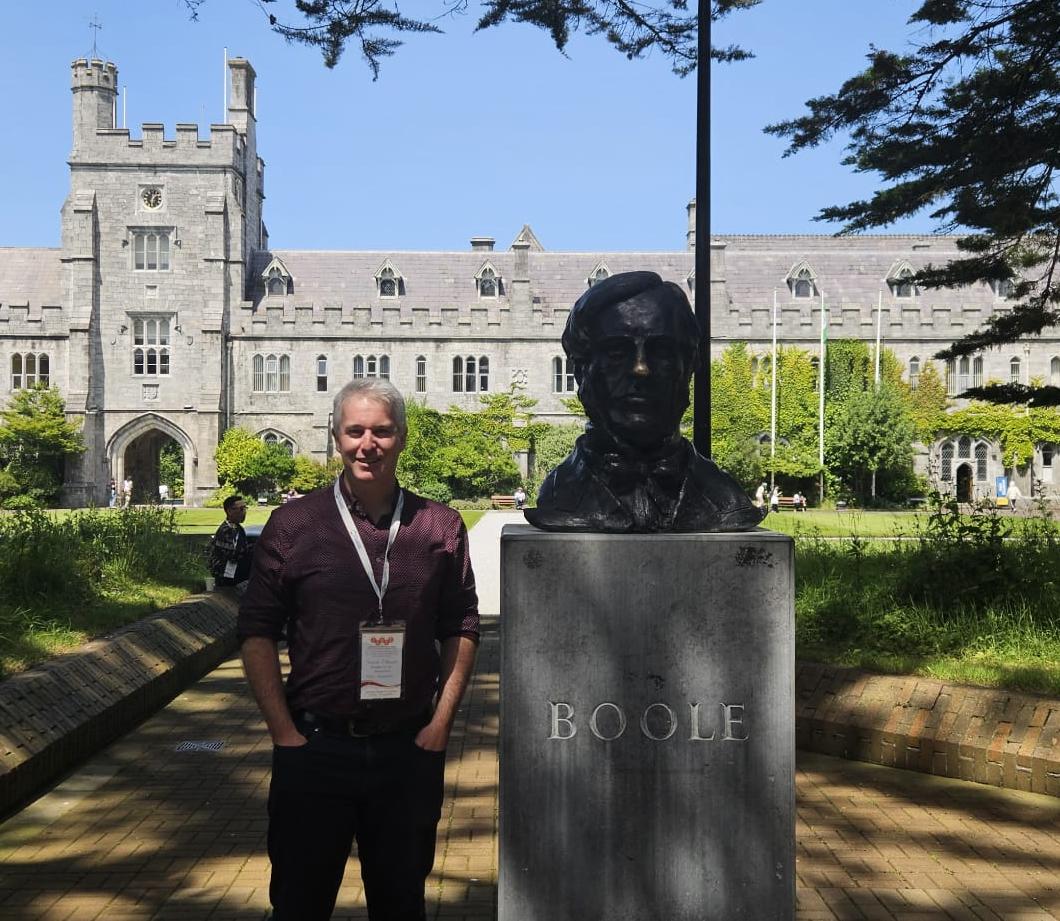
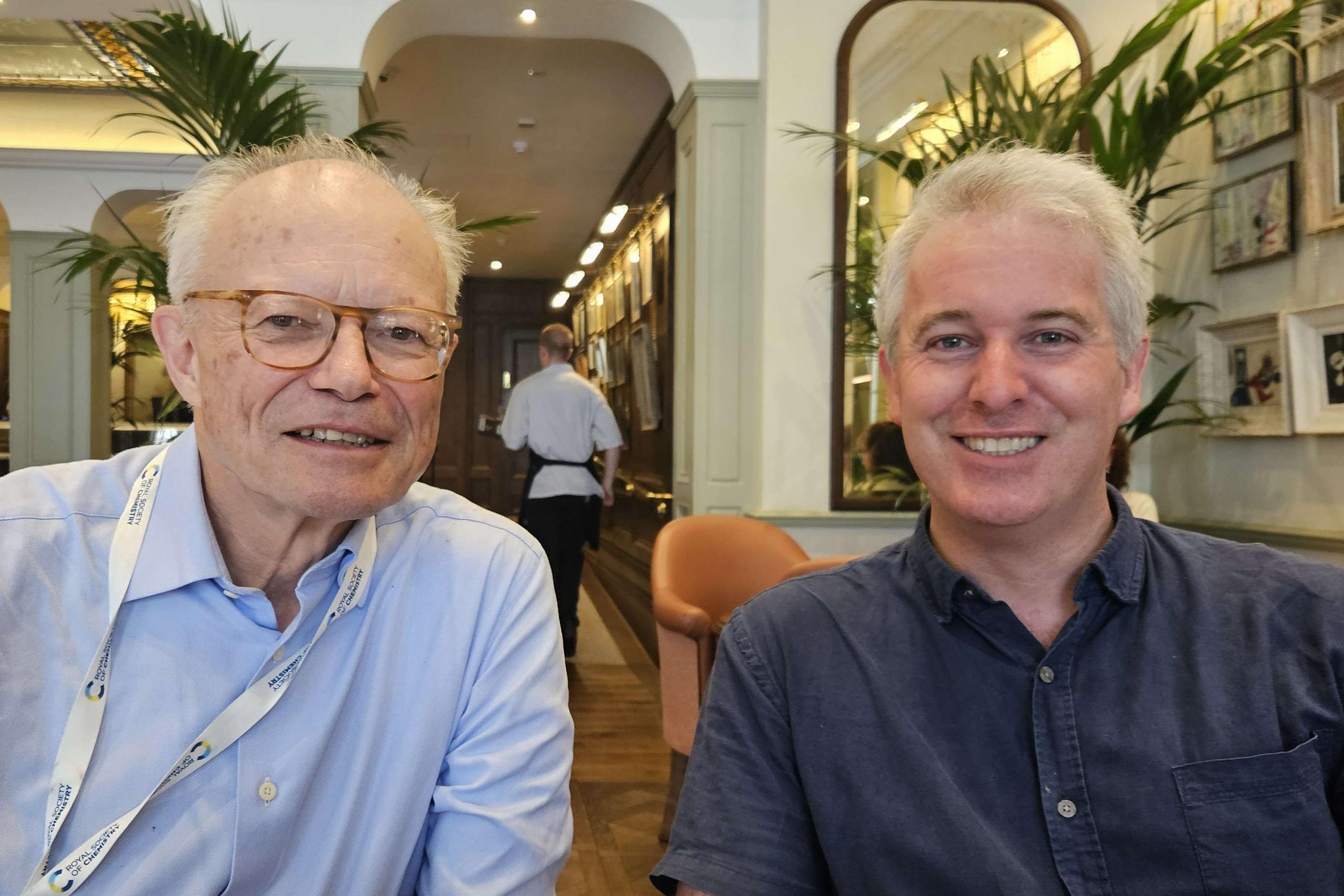
First image: Outside University College Cork with the statue of George Boole, mathematician, educator, and founder of Boolean algebra, whose work forms the foundation of modern computing. Second image: With Professor Jonathan Osborne, chair of the science expert group at PISA
New Zealand's most recent PISA results show a mixed picture. Our students continue to perform above the OECD average in reading, mathematics, and science, but long-term trends show declining achievement, particularly in mathematics and science. The proportion of students performing below the baseline level of proficiency has also increased over the past decade.
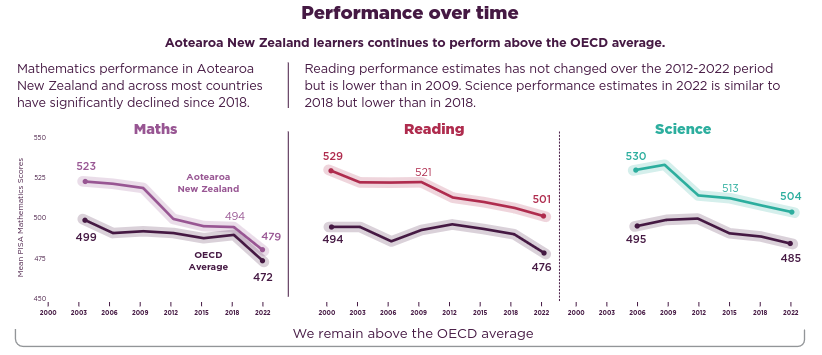
Figure from: PISA 2022: Aotearoa New Zealand Achievement Summary
A very important question for us as a nation is whether our young people are developing the knowledge, judgement, and habits of mind needed to navigate an increasingly complex world.
This to me reinforces why The Academy will place such a strong emphasis on both knowledge and application, and why project work, scientific investigations, communication, debate, and problem solving will be central features of our programme. Students need a deep foundation of scientific knowledge and understanding, but they also need opportunities to use that knowledge authentically.
Another powerful theme from the conference was the importance of teaching students how to reason. I was particularly impressed by research from the UK's CASE (Cognitive Acceleration through Science Education) programme, which develops students' ability to evaluate evidence, justify conclusions, and communicate their thinking under quite challenging conditions. We will be exploring how these approaches might be incorporated into The Academy's curriculum.
These discussions brought to my mind the fact that today's young people are exposed to an endless stream of information. One figure touted is that almost all US teenagers use the internet several times per day. No teenager can independently evaluate every scientific claim they encounter, actually I doubt many can. We are all dependent on the expertise of others in fields outside our own. Scientific literacy therefore is not just about knowing facts, but understanding how reliable knowledge is produced and the ecosystem in which this happens. Students need to appreciate the systems of evidence, peer review, replication, criticism, and consensus-building that underpin modern science. In this new age of ours with AI, social media, and misinformation, knowing if/why a source can be trusted is just as important as knowing the science itself.
The world our students will inherit will demand informed, scientifically literate citizens who will need to navigate a lot of uncertainty to make wise decisions. That is the kind of education we are striving for at The Academy.
Warm regards,
Tristan O’Hanlon
Principal, The Academy